
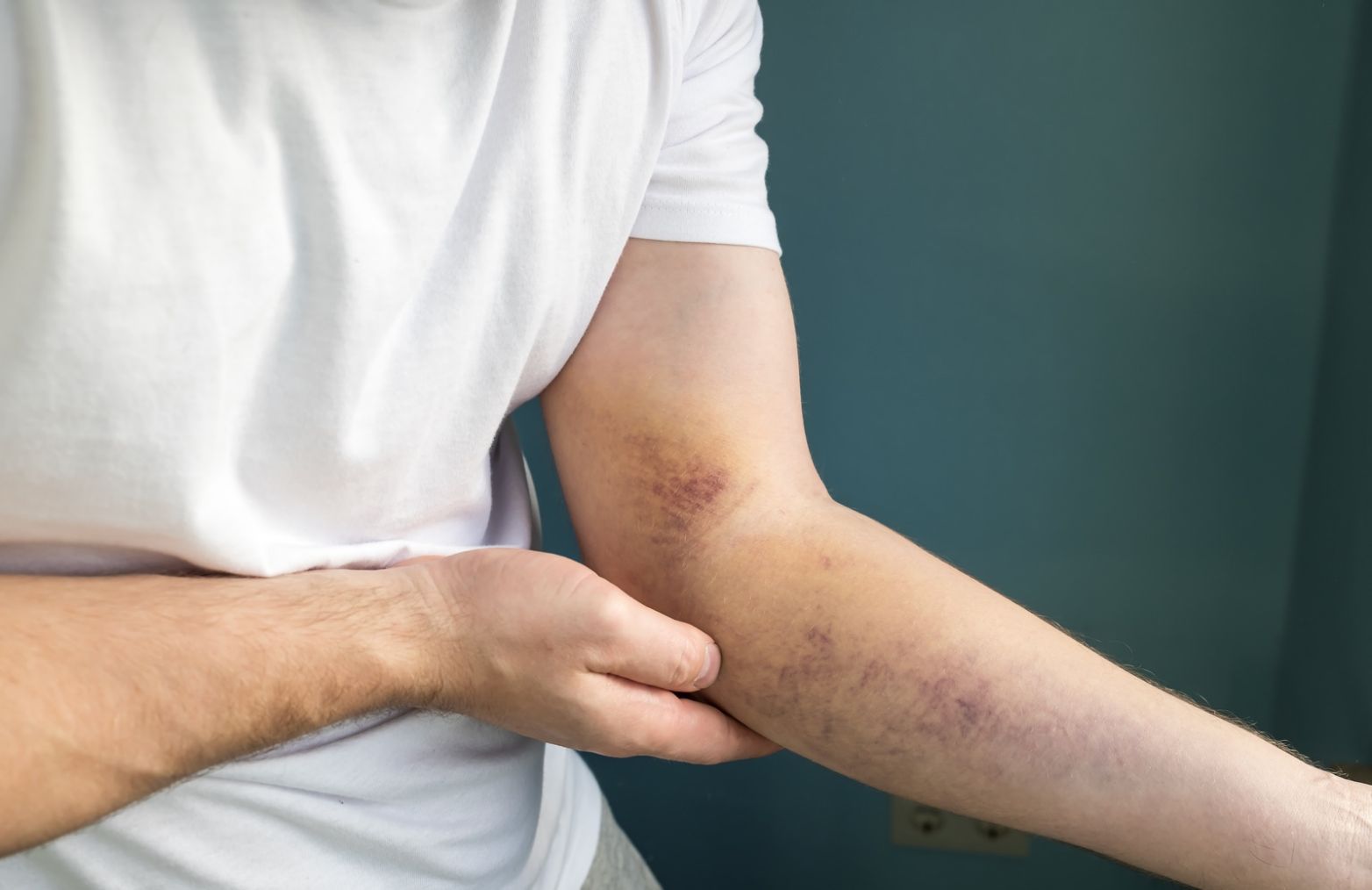
Ecchymosis, commonly known as a “bruise”, is a collection of blood that forms under the skin when small blood vessels break, usually as a result of trauma. In most cases it is a benign condition that clears up on its own within one to two weeks. However, when it appears without an obvious cause or occurs frequently, it may be a sign of a condition that needs further medical investigation.
Ecchymosis is a lesion caused by blood leaking from the capillaries into the subcutaneous tissues. This produces a patch of varying colour, initially reddish-blue or purple, which over the following days turns green and yellowish before disappearing completely.
Unlike a haematoma, in ecchymosis the blood is spread through the tissues and does not form a localised, raised collection.
The most common cause is accidental trauma, even a minor one.
However, many factors can make bruising more likely, including:
- capillary fragility
- skin ageing
- intense physical activity
- taking anticoagulant or antiplatelet medication
- long-term corticosteroid treatment
- vitamin deficiencies, particularly vitamin C and vitamin K
- blood clotting disorders
- liver or blood disorders
What symptoms can accompany a bruise?
As well as the typical skin discolouration, there may be:
- pain in the affected area
- mild swelling
- tenderness to the touch
- temporarily restricted movement, if the injury involves joints or muscles
In most cases these symptoms gradually improve without the need for specific treatment.
It is advisable to see a doctor when bruises:
- appear frequently without any obvious injury
- are very large or particularly painful
- grow rapidly in size
- are accompanied by nosebleeds or bleeding gums
- appear together with fever, marked tiredness or weight loss
- do not clear up within two to three weeks
In these cases, blood tests may be needed to assess clotting function or identify any underlying conditions.
The first point of contact should be your GP (general practitioner), who will assess the characteristics of the bruise and whether further tests are needed.
Depending on the suspected cause, the patient may be referred to a specialist, such as:
- a haematologist, if there are clotting abnormalities or blood disorders
- an angiologist, if significant vascular fragility is suspected
- a dermatologist, when the bruise needs to be distinguished from other skin lesions
- an internist, where systemic conditions are involved
In most cases it is enough to apply ice for the first 24–48 hours, rest the affected area and avoid further injury.
The colour of the bruise will change gradually until it has fully healed, as bruises are usually the result of minor injuries and are not a cause for concern.
Only when the bruise is a symptom of an underlying condition will it be necessary to treat the underlying cause.
However, frequent bruising for no apparent reason, or bruising accompanied by other symptoms, should not be underestimated. A prompt medical assessment makes it possible to identify any conditions that require specific treatment and to prevent complications.
